
Why Virtual Assistant Handoffs Fail
Learn the 4-step handoff framework to delegate tasks, train VAs, and avoid operational delays.
Why Your Last Virtual Assistant Failed (The 4-Step Blueprint to Fix Your Next Handoff)
The single biggest reason founders fail with a Virtual Assistant isn't a "bad hire"—it’s a bad handoff.
You wake up, open Slack, and see a project that looks absolutely nothing like what you pictured. Your blood pressure spikes. You sigh, close the tab, and think: "Forget it, it’s just faster if I do it myself."
Sound familiar? To successfully scale your business, you have to stop treating a VA like a mind-reader and start treating them like an operational partner. AtXecutely, we help founders transition away from this exact operational breakdown.
1. The "Definition of Done" Framework
Never assign a task without defining exactly what victory looks like. Before you hit send, your task assignment must contain these three core pillars:
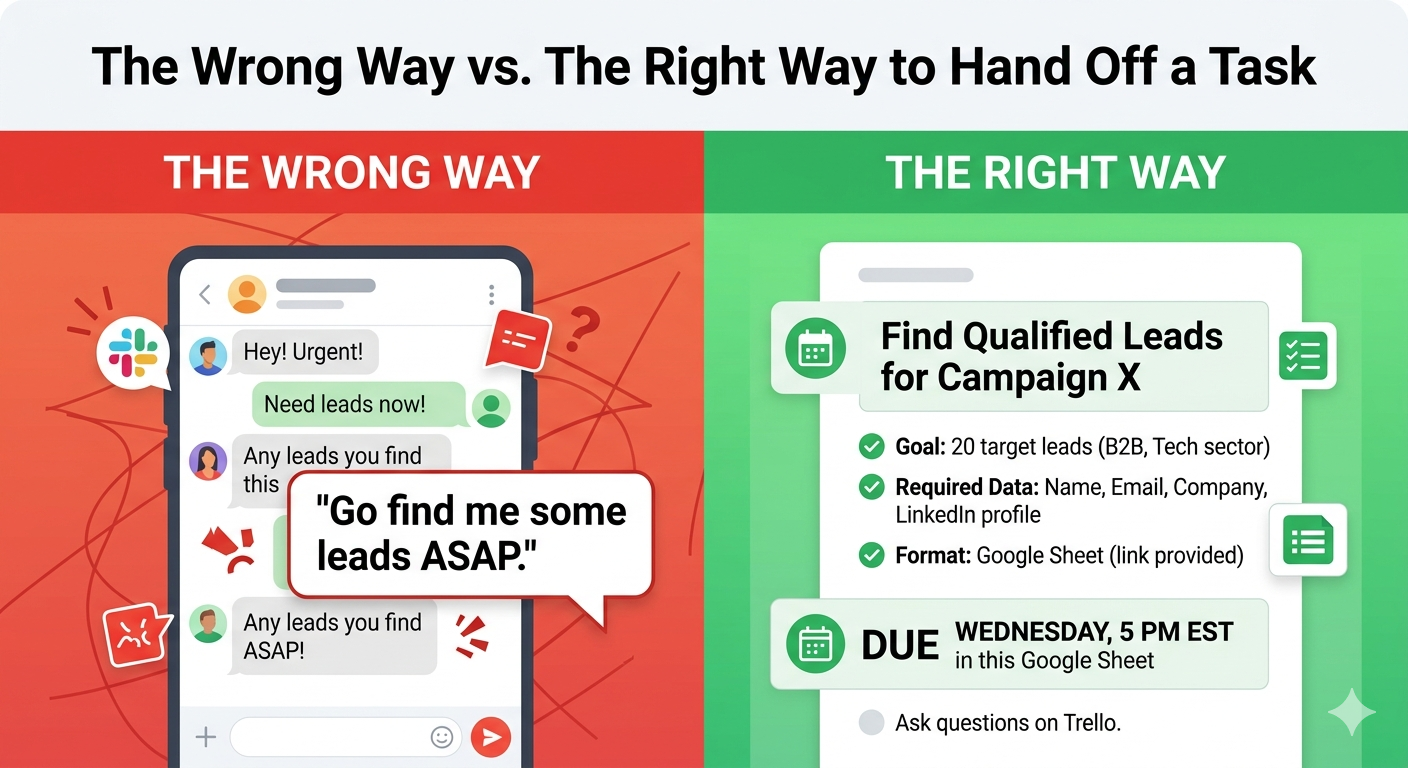
The Context (The "Why"): Explain what this task achieves. If a VA knows why they are pulling a list of 50 Shopify stores (e.g., to pitch them a specific software partnership), they can make intelligent, micro-decisions along the way.
The Format (The "How"):Specify exactly where the work should live. Don't just say "Go find some leads and send me the data." Be specific: "Populate columns A through E in this specific Google Sheet template with their Name, Website, and LinkedIn Profile.
The Deadline (The "When"): Eliminate phrases like "whenever you can" or "asap." Give a hard date, time, and timezone: "Due Wednesday by 5:00 PM EST."
2. Shift from Real-Time to Asynchronous Training
You do not need to sit on a 2-hour Zoom call to train a VA. In fact, that defeats the purpose of saving your time. Instead, build a reusable asset while you do your normal work.

The Loom Method
Record your screen using Loom while doing your normal daily work. Don't block out special time to train them—clone yourself while you work.
Narrate your clicks out loud. Don't just click things; explain why you are selecting certain options so they learn your decision-making process.
Intentionally show your mistakes. If a software tool glitches or you make an error, don't restart the video! Keep recording and show them exactly how you troubleshoot it. That is where the real training happens.
The "SOP Reverse-Engine"
Once you send the video to your VA, give them their very first assignment:
"Watch this video and write a step-by-step Standard Operating Procedure (SOP) in our Notion database based on what I just did."
This forces the VA to deeply process the information, proves they understand it, and builds your company's internal training library for free.
3. The 3-Tier Authority Matrix
One of the biggest bottlenecks founders create is forcing the VA to ask for permission on every single micro-decision. You must explicitly state what level of autonomy they have over a task.
Before handing over an operational area, classify it into one of these three tiers:
Tier 1: Run & Report
Definition: The VA has full authority to execute the task autonomously. They just report the outcome at the end of the week.
Example: Answering basic "Where is my order?" support tickets within policy.
Tier 2: Draft & Approve
Definition:The VA does 90% of the work, but you must sign off before it goes live to the public or a client.
Example: Drafting an email newsletter campaign or a client contract.
Tier 3: Research & Recommend
Definition: The VA gathers data, maps out the options, and presents a recommendation—but you make the final choice.
Example: Finding the best three project management tools based on pricing and features.
4. Establish a Single Source of Truth
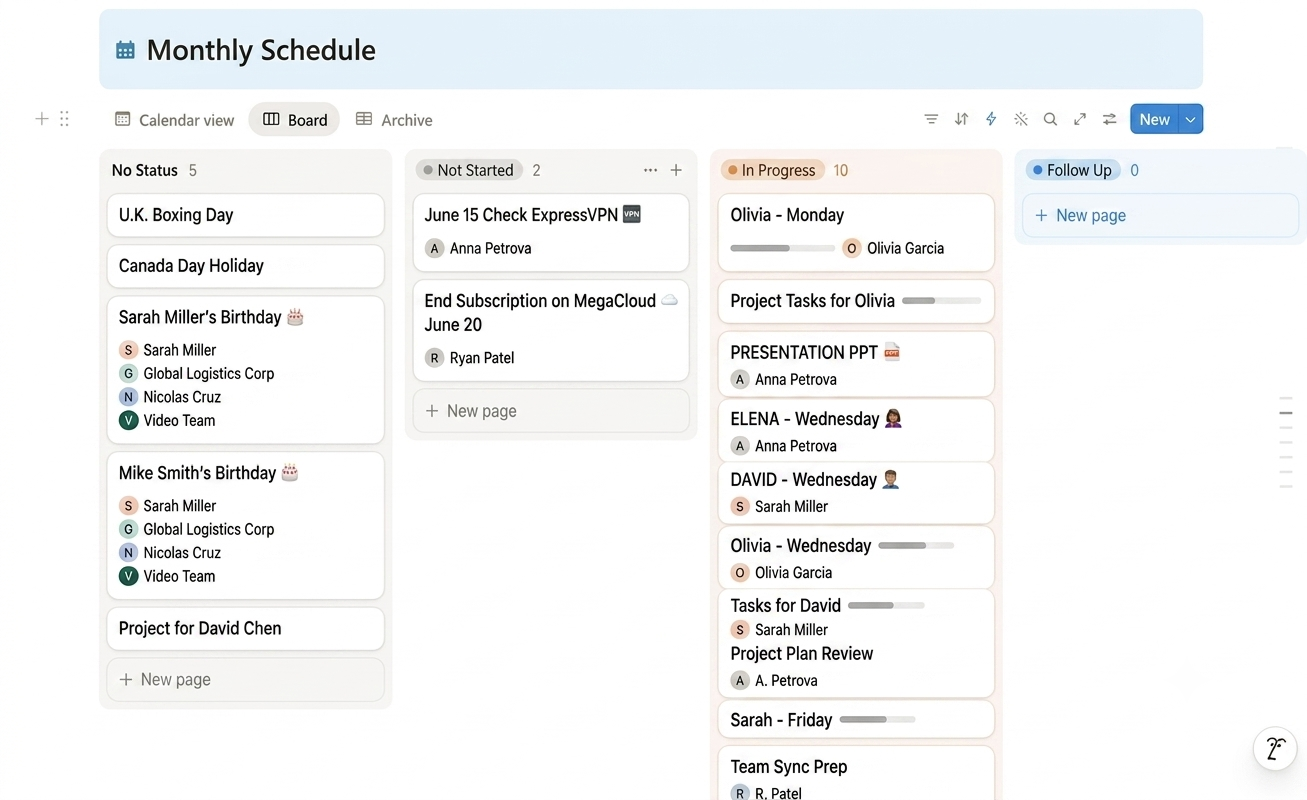
If your delegation lives across text messages, WhatsApp, emails, and phone calls, tasks will drop. Protect your operations by enforcing strict communication boundaries:
The Project Hub: All tasks must live in a centralized tool like Notion, Asana, ClickUp, or custom pipelines. (You can see exactly what tools our team integrates with on our Xecutely FAQ page). If a task isn’t in the system, it doesn’t exist.
The Daily Standup: Have your VA drop a 3-bullet update at the start or end of their shift:
What did I complete today?
What am I working on tomorrow?
What am I currently blocked by?
5. Remove Yourself from the Operational Bottleneck
Setting all of this up takes work. Writing SOPs, filming Looms, and building dashboards is practically a full-time job in itself. And ironically, you're trying to get out of the operational weeds, not deeper into them. You can see exactly how other scaling brands have built automated structures around their daily workflows on our Xecutely Use Cases breakdown.
Ready to Delegate Without the Training Headache?
We provide founders with pre-trained, managed virtual assistants who already know your tech stack on Day 1—backed by a full operational team that handles daily KPIs and accountability for you.